

JOB-PORTAL
JOB-PORTAL
    Portale del lavoro
    Vacatureportaal
    Portal del empleo
    Portal pracy

Co-Location Potential Analysis

We examine whether adding a battery storage system (BESS) to your PV project is technically, grid-wise, and permitting-wise feasible – and which sizing is most economically viable.
Inquire NowLearn more

Co-Location: Is a battery storage system worthwhile for your PV project?

Pure PV projects are increasingly under economic pressure. Hybridization with a battery storage system can be a decisive lever here.

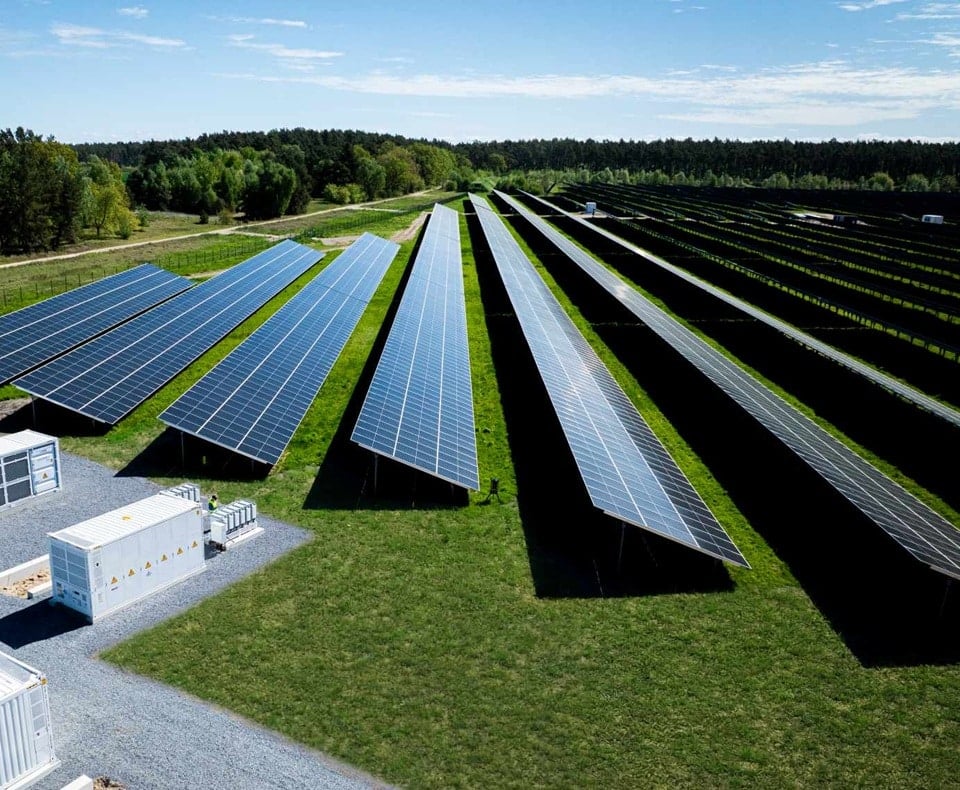
With battery storage systems, PV power generation can now be better adapted to market and grid realities. Surpluses can be temporarily stored instead of curtailed, and an existing grid connection is utilized more efficiently. Especially against the backdrop of scarce connection capacities and increasing grid bottlenecks, flexibility becomes a decisive project factor – and co-location a pragmatic option for implementing projects more economically and investably.

This is precisely where we come in: In our Co-Location Potential Analysis, we individually and project-specifically examine the grid- and permitting-related as well as technical framework conditions for expanding PV to co-location with BESS. We evaluate several design variants, transparently calculate the economic viability, and derive a clear recommendation for your next steps. We consider the hybrid system as a unit or evaluate the BESS expansion separately.

Co-Location Battery Storage

When is a Co-Location Potential Analysis useful?

If PV-only is barely economical

A battery storage system can unlock additional revenue potential and improve the economic viability of the site. In the potential analysis, we use various simulations to examine not only the technical feasibility but also the extent of the economic added value or possible revenue increase through co-location in your specific project.

If you want to know what a BESS expansion means for your current PV system – and what might still be missing

We review existing documents and framework conditions (e.g., grid connection agreement, technical planning, permitting status, and relevant contracts) and derive their impact on the design, operation, and economic viability of a potential hybrid system. Additionally, we show which additions or verifications are project-specifically required for a BESS expansion (e.g., additional expert opinions such as noise, soil, fire protection, wastewater, visibility, environment).

If you want to know how a BESS could be technically integrated into your existing PV project

We examine the technical integration logic at a high level, identify key interfaces, and make essential technical risks transparent.

If you want to know which grid-side options co-location realistically permits in your project

We evaluate the grid-side framework conditions and their impact on design, operation, and economic viability – including possible restrictions and leeway.

If you want to compare the achievable marketing revenues with and without BESS

We compare scenarios and transparently show what economic difference co-location is likely to make in your project compared to PV stand-alone, and which additional revenue streams/markets are accessible (e.g., balancing power markets).

If you want to determine the optimal sizing of a BESS for your individual project

We compare several design variants (power/capacity) and derive a preferred variant – suitable for your project goals and boundary conditions.

If you need a reliable decision-making basis for the next steps

Instead of gut-feeling assumptions, you receive a structured assessment of feasibility, risks, and economic viability – as a basis for investment and project decisions.

Green power case as basis, grey power as upside option

For the investment decision, we first evaluate the green power case: The storage primarily uses surpluses from the PV system, and the existing grid connection is generally reused. If additional grid import capacity is possible, we support the grid application process – e.g., also via flexible grid connection agreements (FCA) initially to a limited extent. Upon request, we consider the grey power option as an upside scenario for the future: We examine whether and under what grid-side conditions additional electricity import can realistically be developed and what economic added value this can bring in the long term.
green power case as basis

What you will have
in hand after the Potential Analysis

Icon with forward arrows

Clear Go/No-Go classification for Co-Location

You receive a structured assessment of whether a BESS expansion is fundamentally sensible to pursue under the current framework conditions.
Icons for financial returns

Transparent overview of relevant framework conditions

We summarize the crucial points from grid, permitting, and existing situation in such a way that they serve as a reliable basis for internal decisions and coordination.
Icon with certificate

Gap list: What is missing for co-location capability?

You receive a prioritized overview of which documents, proofs, or clarifications are still required for a BESS expansion.
Icon with construction worker

Variant comparison for design & operation (sizing scenarios)

We compare several design variants and derive a preferred variant – with comprehensible reasoning.
Icon with right arrows for progress

Economic viability comparison: with BESS vs. without BESS

You receive a transparent comparison of scenarios as a decision-making basis for investment, further development, or exit.
Icon for maintenance and installation

Robustness check: Which assumptions are crucial?

We show which drivers most strongly influence the result and how stable the recommendation remains with changed assumptions.

How the Co-Location Potential Analysis proceeds

Icon with the number 1

Kick-off & Target Vision

We clarify the initial situation, objectives (e.g., value enhancement, RtB, retrofit), and the desired time horizon. At the same time, we coordinate which variants and assumptions are relevant for your decision.
Icon with the number 2

Data & Document Check (PV Status) + Review

We review the available project documents and derive which framework conditions are already set – and where information gaps exist that influence the assessment.
Icon with the number 3

Grid-side classification: Options, Restrictions, Leeway

We evaluate the grid-side framework conditions and their consequences for a BESS expansion. The goal is clarity on which operational and design options are realistic.
Icon with the number 4

Permitting & Contract Check including Gap Analysis

We examine which aspects from the permitting status and contractual situation are crucial for co-location and identify possible additional requirements. This results in a prioritized gap list (e.g., potential need for expert opinions).
Icon with the number 5

Technical High-Level Concept & Variants (Sizing)

We develop a technical high-level concept for storage integration and compare several design variants (power/capacity). In doing so, we make central interfaces and technical risks transparent.
Icon with the number 4

Economic Viability Assessment, Robustness Check & Recommendation

We compare scenarios (with/without BESS), transparently evaluate economic viability, and test key sensitivities. The result is a clear recommendation including next steps.

Why greentech is the right partner on your Co-Location journey…

Individual Review instead of Standard Calculator

Co-location projects are complex: grid connection, permitting status, contractual situation, and system concept differ from project to project. We specifically evaluate your initial situation and derive realistic options for a BESS expansion. This provides you with a decision-making basis that suits your project – not an average case.
Co-Location Discussion and Partnership
Co-Location Drone Potential Analysis

Experience from own Co-Location projects

We don’t just consider co-location theoretically. greentech has already developed PV projects to co-location readiness for construction and knows typical pitfalls, dependencies, and success factors from practice. This experience directly informs the assessment of feasibility, risks, and sensible variants.

Technical and economic planning from a single source

Our teams from Engineering, Project Development, and Origination combine technical feasibility, grid perspective, and economic viability into a consistent overall assessment. This reduces interface risks, ensures consistent assumptions, and accelerates coordination.
Co-Location Technical and Economic Planning

Optional: Further development to construction readiness possible

If the potential analysis yields positive results, we can also support the further development of your co-location project to construction readiness upon request. This implementation service is deliberately presented separately and can seamlessly follow the analysis if needed.
battery energy storage systems bess small

What you receive from the Co-Location Potential Analysis

Results Report

with Executive Summary, assessment, and clear recommendation (Go/No-Go or preferred variant)

Overview of tested design variants

(BESS power/capacity) incl. brief justification for selection

Economic viability comparison:

PV stand-alone vs. PV + BESS (scenario comparison with transparent assumptions)

Assumptions and Parameters Overview

(e.g., CAPEX/OPEX logic, degradation/availability assumptions, relevant cost/revenue drivers)

Grid-side classification:

relevant framework conditions, restrictions, and leeway – and their impact on operation and economic viability

Permitting & Contract Review (Summary):

which points from existing assets/documents are crucial for BESS expansion

Gap List / Next Steps Roadmap:

which documents, proofs, or expert opinions may additionally be required (prioritized)

Robustness Check (Sensitivities):

which drivers dominate the result and how stable the recommendation remains with changed assumptions

CO-LOCATION POTENTIAL ANALYSIS


Here you can download our flyer for the Co-Location Potential Analysis

Overview of greentech services for PV and BESS, structured by project phases: Development, Planning & Construction, and Operation.

Optional: Project Development
to Construction Readiness

Co-Location Project Development
If the potential analysis yields positive results, we can also support you, upon request, in the further development of your co-location project to construction readiness – e.g., with the coordination and supplementation of the permitting planning, the expansion of the grid connection procedure, and the preparation of building permit documents. If required, we also accompany the technical planning up to implementation readiness (e.g., detailed design), the preparation of tenders/bids, and subsequent construction and acceptance support.

FAQ: Co-Location Potential Analysis

Frequently Asked Questions about Co-Location, Battery Storage (BESS) Expansion, and a Potential Analysis

What is a Co-Location Potential Analysis?

A Co-Location Potential Analysis examines whether adding a battery storage system to a PV project is technically, grid-wise, permitting-wise, and economically feasible. For this, we evaluate several design and operational scenarios, transparently compare the results, and derive a clear recommendation for the next steps.

Who is the analysis particularly relevant for?

For project developers who want to evaluate co-location but lack the resources or capacity to do so themselves. And for asset managers or owners who want to examine how a BESS can increase the yield and value of an existing PV asset.

Which documents and data are required for the Co-Location Potential Analysis?

Typical documents include those related to the PV project status (e.g., layout/planning status), information on the grid connection (e.g., grid connection agreements/conditions), and existing permitting and contractual documents. If something is missing, we define in the kick-off which information can be submitted or replaced for a reliable assessment.

Is the existing grid connection contract also reviewed regarding a possible BESS expansion?

Yes. We examine which regulations and boundary conditions are relevant for a BESS expansion and what they mean for design, operation, and economic viability. Crucially, it’s not just “what the document says,” but what consequences arise from it for your project.

Is economic viability compared with and without battery storage?

Yes. A central component is the transparent comparison of PV stand-alone versus PV + BESS based on comprehensible assumptions and scenarios. This clarifies the likely economic effect of co-location in your project.

How is the appropriate BESS size (sizing) determined?

We evaluate several design variants for power and capacity and derive a preferred variant. In doing so, we consider the project-specific boundary conditions (e.g., grid, permitting, technical integration) and the economic impact.

What do "robustness check" or "sensitivities" mean?

We test how stable the result is if key assumptions change (e.g., CAPEX, price assumptions, degradation, grid fees). This shows which factors dominate the result and how reliable the recommendation remains under changed framework conditions.

Is the potential analysis already the project development up to construction readiness?

No. The potential analysis provides the decision-making basis (feasibility, risks, economic viability, recommendation). If the result is positive, we can, upon request, subsequently take over the project development up to construction readiness – this is a separate service.

What typically happens after the analysis?

Depending on the result, we recommend either concrete next steps (e.g., clarifications, proofs, in-depth analyses) or a clear Go/No-Go decision. If you wish, the subsequent project development up to construction readiness can directly follow the analysis.

Must further implementation also be carried out by greentech?

No. The potential analysis is structured to serve as a basis for further project development – regardless of who ultimately undertakes the implementation.

Still have questions?

Can’t find the answer you’re looking for? Please get in touch with our team of experts

Why work with greentech?

Icon of greentech.energy's experience

Years of experience

Icon for team size

Employees active in 6 European countries

Icon for the number of projects

Projects in the development pipeline

Icon number of ground-mounted PV systems built

Ground-mounted PV systems built

Icon for the number of projects

in technical consulting

Icon for team size

in operational management

Your specialists for Co-Location Potential Analysis at greentech

Julian-Linde
Julian Linde

Team Lead Project Development

Julian Linde is a Team Lead in Project Development at greentech, focusing on the business and co-development of co-location projects with BESS integration. Before joining greentech, he spent three years in project development and financing of renewable energy projects at an international investment company. He studied economics in Mainz, Hamburg, and Strasbourg. His professional career began in investment and portfolio management.
Joern Carstensen Chief Technical Officer (CTO)
Joern Carstensen

Chief Technical Officer (CTO)

In his role, Jörn Carstensen combines the management of all technical areas of the greentech group. As CTO, he is responsible for plant construction, engineering services and technical management. The aim is to create uniform standards and processes across all technical areas at greentech, thereby ensuring company-wide synergies, high quality and the greatest possible transparency.

Jörn Carstensen joined greentech in 2014 as Business Development Manager. In addition to developing various European markets, he built up the Engineering and Technical Advisory division. From 2006 to 2014, he worked for the Conergy Group in various international corporate and business development positions. Prior to that, he worked for a consulting unit of Accenture and supported utility companies in strategic and organisational issues. Jörn Carstensen holds a degree in Industrial Engineering with a specialisation in Energy and Environmental Management from the Universities of Flensburg and Southampton.

Contact

Only 45 seconds for your request

Loading

You might also be interested in

Preliminary Design & Yield Forecast

Grid Connection & Integration