







Solar project development:
Building tomorrow's energy, today
Large-scale solar farm development
From site identification to Ready-to-Build – we develop large-scale solar projects across the UK
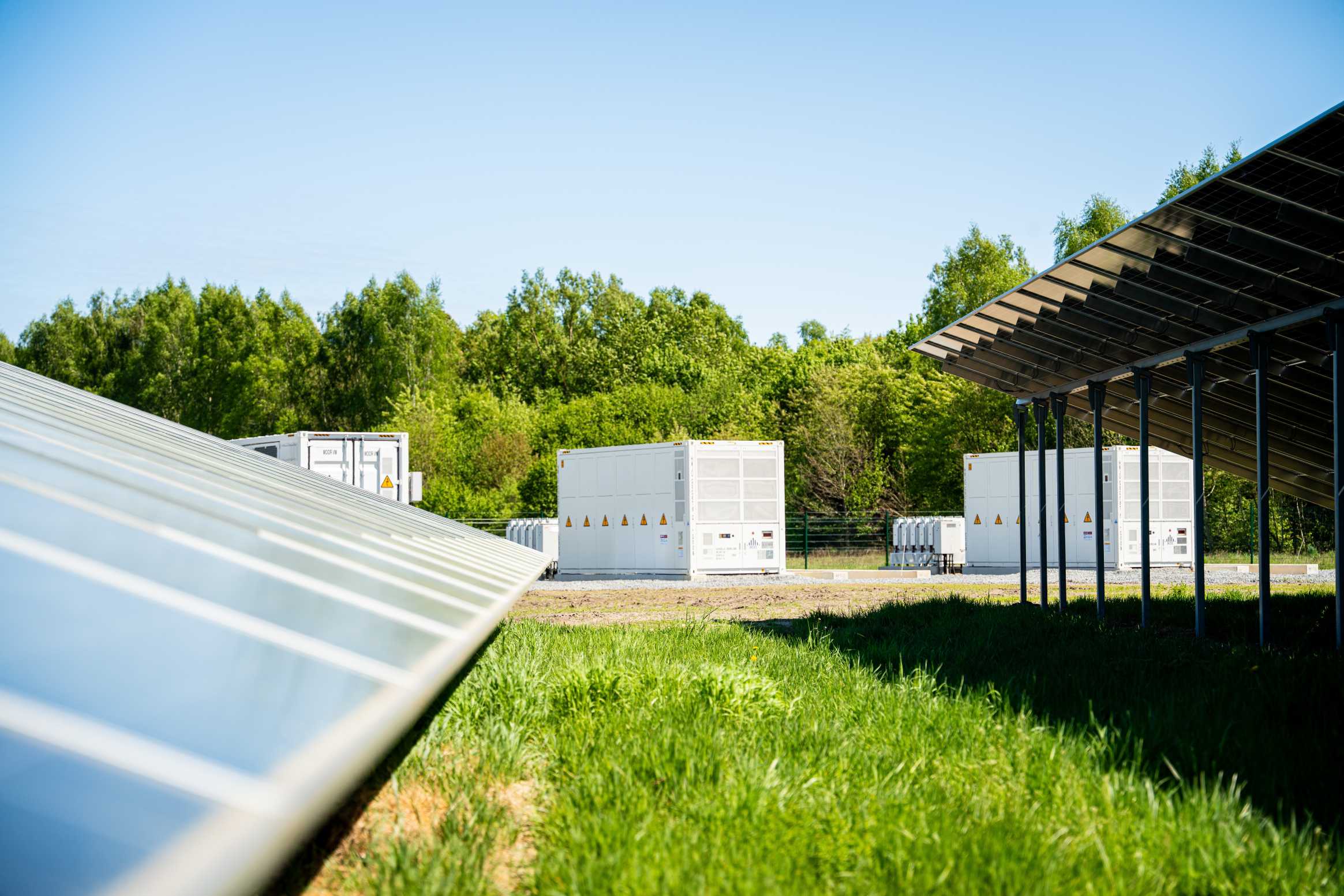
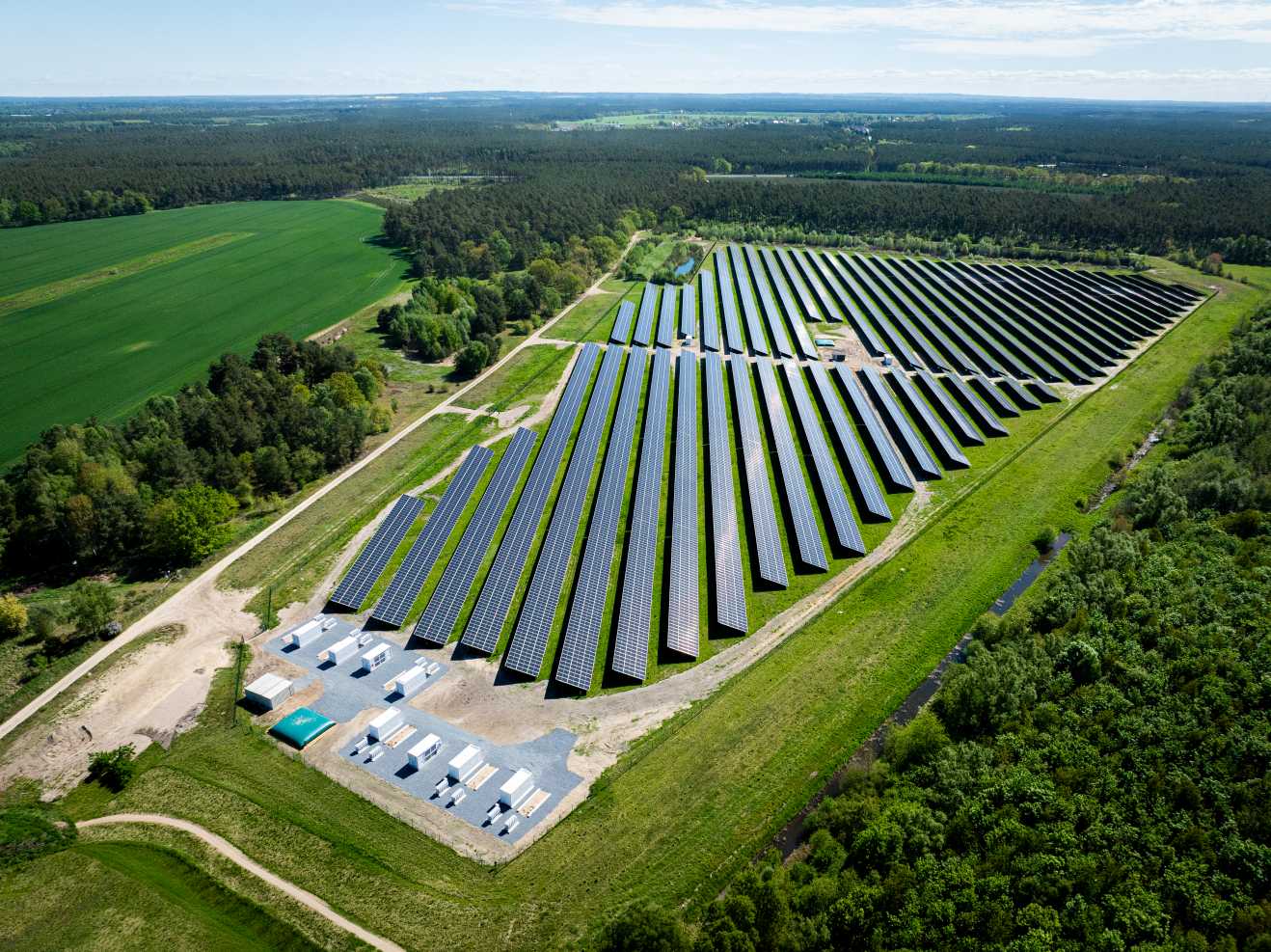
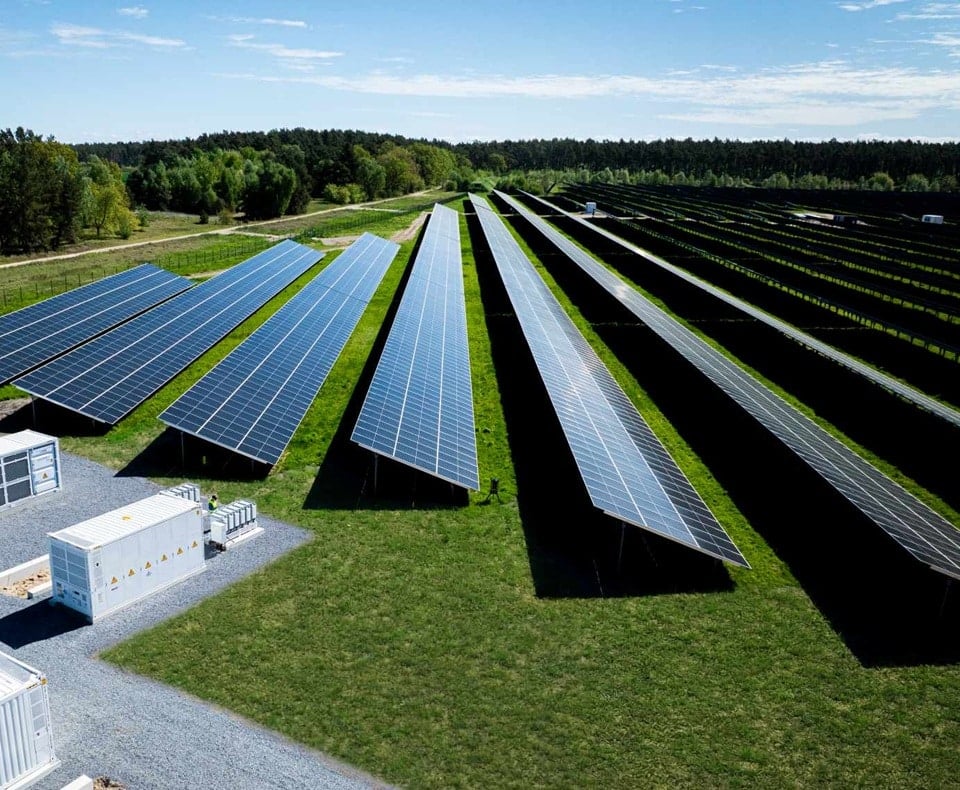
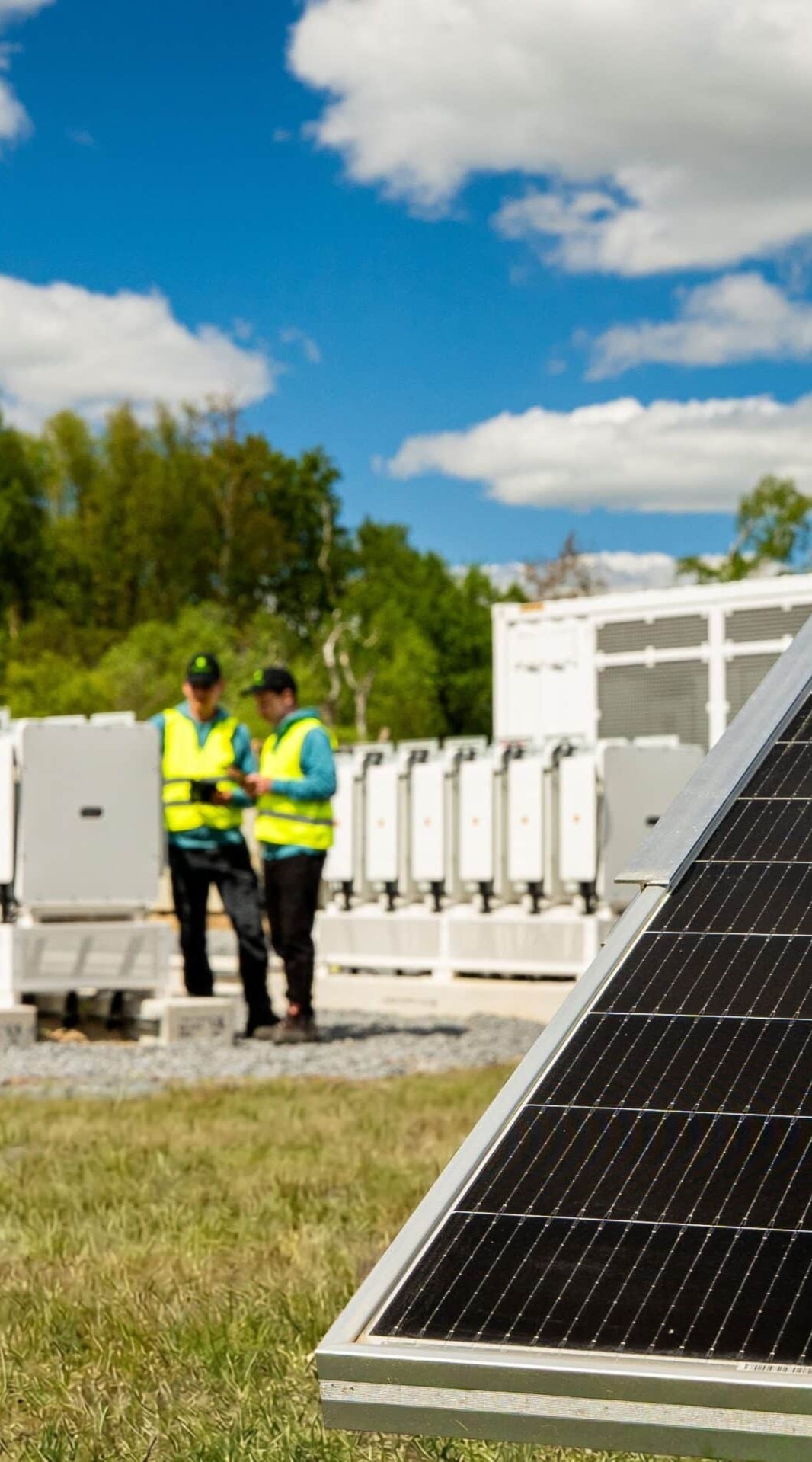
greentech develops large-scale, ground-mounted solar farms – building the foundation for a cleaner, more secure energy system.
As a project developer of large-scale ground-mounted photovoltaic plants, greentech guides solar projects from initial concept through to Ready-to-Build stage, bearing all development costs. Our expertise covers the full development cycle – from site identification and permitting, to technical design and grid connection, to offtake strategies and structured financing. We also partner with external developers on co-development opportunities.
Our core development markets are Germany, the UK and Italy. With an international team of over 30 development professionals, we have built a project pipeline exceeding 10 GW. As a fully integrated specialist, greentech also delivers EPC, technical asset management and portfolio management beyond the development phase.
Success factors

Project development know-how
Management team with a track record in more than 5 GW in the areas of development, construction and operation of PV power plants as well as an international team of around 30 project development experts.
Technical expertise
More than 200 employees with a focus on PV and as a group of companies more than 15 years of experience in operations and engineering for investors.

Financial strength
Management team and shareholders with extensive track record for project financing with a total investment volume of more than € 7 billion in various asset classes.
Our services
For landowners
As a landowner, you benefit from attractive, long-term lease income for 30 years or more.
For suitable sites, we conclude a long-term lease agreement with you and then take over the entire implementation, from technical planning, obtaining all necessary permits, grid connection, offtake concepts, and the construction and financing of the PV system.
For local authorities
A solar farm also represents a profitable investment for municipalities and at the same time boosts the local economy. greentech supports you in the complete planning and implementation of such a project!
Solar parks strengthen the local economy, put brownfield sites to good use, and generate additional revenue for local authorities, e.g. through leasing, sales, and business taxes. At the same time, an active and measurable contribution is made to achieving the climate targets set in Germany and within the EU.
For project developers
You would like to sell project rights or are looking for a strong partner in order to achieve significantly more together in the future through cooperation? We take over your project rights at all stages of development and enter into long-term partnerships for co-developments.
You benefit from our project experience and from our financial strength, which is needed for larger projects right from the start.
How we develop a solar farm
- Contact Landowner
- Option to Lease Contract
- Grid Offer and Acceptance
Location
- Pre-Planning preparation
- Reports & Surveys
- Submission of Planning to Local Authority
Preliminary planning
- Review of Planning Approval
- Review of Planning Conditions
- Discharge of Pre-Construction Conditions
Approval
- Detailed and Executive Planning
- Procurement
- Construction & Supervision
Here you can find further information about the EPC area.
Construction
- O&M
- Asset Management
- Offtake
Here you will find further information about the area of operations management.
Operational management
Site & Grid Identification
- Contact Landowner
- Option to Lease Contract
- Grid Offer and Acceptance
Planning
- Pre-Planning preparation
- Reports & Surveys
- Submission of Planning to Local Authority
Judicial Review
- Review of Planning Approval
- Review of Planning Conditions
- Discharge of Pre-Construction Conditions
Construction
- Detailed and Executive Planning
- Procurement
- Construction & Supervision
Here you can find further information about the EPC area.
Operation
- O&M
- Asset Management
- Offtake
Here you will find further information about the area of operations management.
Land opportunities
Are you the owner of an open space and looking for a way to increase your yield safely and sustainably?
We are looking for
- Areas of 10 acres or more for the construction of BESS: arable or industrial land, preferably in the vicinity of existing grid infrastructure to lease or buy.
- Areas of 50 acres or more to lease or buy for the construction and operation of solar farms.

Origination
Utility and corporate PPAs made to measure – we develop green power supply contracts for your individual needs.
Team
With many years of experience and our interdisciplinary approach, we develop successful photovoltaic projects for the future.

John Hill
Head of Development
John Hill is responsible leading UK project development activities. He started with greentech in 2022 and oversees the process from inception through to Ready to Build. Before joining greentech, John gained extensive experience as a Management Consultant within the agricultural sector. In addition to his consulting work, he successfully managed, operated, and expanded his own dairy farm. One of his notable achievements includes project managing the construction of a new greenfield site dairy, which facilitated the expansion of his herd from 120 to 700 cows. He has been and remains very active within the local Agricultural community and held the position of Chairman for his local buying co-operative Vale Farmers for two years between 2021 and 2023. John Hill studied Agriculture and Land and Farm management at Harper Adams University.

Yaw Ofori
Managing Director
Yaw Ofori leads the national team of seasoned PV specialists in seeking out new greenfield development opportunities in the UK. He has been active in the PV industry in the UK since 2006, and has worked for several of the main players within the sector, such as Solar Technologies, British Gas Solar and Conergy. He comes from a background in PV key component sales and EPC, from which he moved into Project Development and deployment. In more recent years, until 2016, he has focused on greenfield developments and the acquisition of project rights, in offering turnkey operational sites to clients. He has gained a vast understanding, comprehensive knowledge and an enormous amount of experience through his track record of deploying over 165 MWp of large-scale projects.

Ingo Rehmann
Chief Executive Officer (CEO)
In addition, Ingo Rehmann heads the Project Development division and oversees Group-wide project development of photovoltaic and battery storage solutions through to ready-to-build status across greentech’s core markets in Germany, the United Kingdom, and Italy. He also leads the Central Services, which act as an internal service provider bundling key cross-Group functions such as Accounting, Human Resources, Corporate Development, and IT Services.
Ingo Rehmann has been active in the PV industry since 2005. He held various management positions at Conergy AG, including in the areas of M&A and as Head of Market Intelligence. In 2008, he founded greentech and developed the company into one of the largest independent PV O&M and engineering companies in Europe. He studied Business Administration in Germany, Australia and Spain.
Contact
Only 45 seconds for your request
Frequently Asked Questions (FAQ)
Your guide to partnering with greentech for solar projects in the UK.
What does greentech's project development in the UK involve?
Our UK focus is on developing large-scale, ground-mounted solar farms as well as Battery Energy Storage System (BESS) projects. We manage the entire process from the initial site assessment to bringing a project to ‘Ready-to-Build’ (RtB) state. This is a core component of our integrated service offering, which also includes long-term operation and maintenance (O&M) across the UK.
What are the key stages of developing a PV, BESS or co-located power plant with greentech?
Our development process is structured in three key phases:
- Site & Grid Identification: Securing land and grid connection capacity.
- Planning: Preparing all necessary surveys and reports to submit a planning application and managing it through the whole process.
- Operation: Managing the ongoing operations, maintenance (O&M), and asset management of the plant.
Does greentech only develop projects?
No. As a comprehensive PV and BESS specialist, greentech also manages the technical asset management and long-term portfolio management of the power plants after the development phase is complete.
What makes greentech a strong and reliable partner?
Our strength lies in three key areas:
- Proven Development Expertise: Our management team has a track record of delivering over 5 GW, supported by a dedicated international team.
- Technical Expertise: With over 200 PV-focused employees across the group, we have more than 15 years of experience in engineering and operations.
- Financial Strength: Our leadership has successfully financed projects with a total investment volume exceeding €7 billion (group-wide).
I am a landowner. How can I benefit from working with greentech?
As a landowner, you can secure an attractive, long-term income for 40 years or more by leasing your land to us, diversifying your income with zero financial risk. We handle all costs and complexities, from planning to construction. Discover the full benefits and see if your property is suitable on our dedicated page.
Learn more on our Lease Your Land page
What kind of land is greentech looking for?
We are actively seeking:
- For Solar Farms: Areas of 50 acres or more to lease for developing, building and operating solar farms.
- For BESS: Arable or industrial land of 10 acres or more, ideally near existing grid infrastructure.
What are the local benefits of a solar farm?
Solar and BESS projects can deliver meaningful benefits to local communities. During construction, they create employment opportunities and support local businesses. Once operational, community benefit funds provide direct financial contributions to local initiatives and organisations. Projects also generate significant business rates revenue for the local council over their lifetime and make a measurable contribution to local and national climate targets and energy security. Well-designed solar farms can additionally enhance local biodiversity through habitat creation and green corridors.
We are project developers. How can we collaborate with greentech?
We are open to partnerships. You can sell project rights to us at any stage of development or engage in a co-development partnership. You benefit from our extensive project experience and the financial strength required to successfully deliver larger projects from the very beginning.
Are you also focused on Battery Storage (BESS) development?
Yes, the development of Battery Energy Storage Systems (BESS) is a key focus for us, as it is crucial for grid stability and a successful energy transition. You can find detailed information about our expertise and services in this area on our dedicated BESS Project Development page.
Learn more about BESS Project Development.
Key questions from landowners, local authorities and developers about solar and BESS project development in the UK.
What planning permission is needed for a solar farm in the UK?
In England, solar projects up to 100 MW require planning permission from the Local Planning Authority (LPA). Projects exceeding this threshold are classified as Nationally Significant Infrastructure Projects (NSIPs) and require a Development Consent Order (DCO) from the Secretary of State.
Similar consenting routes with slightly different thresholds and decision makers apply in Scotland, Wales, and Northern Ireland.
At what size does a solar project become an NSIP?
Solar projects exceeding 100 MW in England are classified as Nationally Significant Infrastructure Projects (NSIPs). This threshold was raised from 50 MW at the end of 2025 to better reflect the scale of modern solar development. For the latest details, refer to the relevant Planning Act provisions.
What are the main revenue streams for UK solar projects?
The primary revenue streams include:
- Power Purchase Agreements (PPAs): Long-term contracts to sell the generated electricity to a corporate or utility offtaker.
- Wholesale Market: Selling power on the open market to capture fluctuating prices.
- Contracts for Difference (CfD): A government scheme that provides a guaranteed price for electricity, awarded through competitive auctions.
Who pays for the grid connection?
The project developer is responsible for all costs associated with connecting to the grid. This involves applying to the relevant network operator, funding the required technical studies, and paying for any necessary network upgrades. These costs are borne entirely by the developer, not the landowner.
What environmental and biodiversity benefits can solar farms deliver?
Well-designed solar farms can significantly enhance local biodiversity. By implementing measures like wildflower meadows, tree and hedgerow planting that form green corridors, and installing features that support new species and their habitats, sites can become havens for pollinators, birds, and other wildlife. Because even productive agricultural land typically supports limited ecological diversity, solar farms consistently deliver substantial biodiversity gains across all land grades. Solar farms typically surpass the minimum Biodiversity Net Gain (BNG) requirement of 10% by some way – with percentages as high as 100%+ [learn more about BNG here].
What does ‘Ready-to-Build’ (RtB) mean in project development?
A project achieves ‘Ready-to-Build’ (RtB) status when all major hurdles have been cleared. This includes having secured planning permission, land rights (lease), and a grid connection agreement. At this point, the project is de-risked and ready for financing and construction to begin.
How do Battery Energy Storage Systems (BESS) support a solar project?
Co-locating a BESS with a solar farm allows the project to store excess energy generated during the day and sell it during periods of increased demand (and high prices). This process, known as tariff arbitrage, creates an additional revenue stream. Batteries also provide essential services to the national grid to help maintain stability. Explore our dedicated BESS Project Development page for full details.
Do BESS installations require separate permissions?
Yes. Grid-scale battery storage requires its own planning consent. Furthermore, operators need a generation licence from Ofgem (in Great Britain) or the Utility Regulator (in Northern Ireland). BESS sites are also subject to environmental permitting requirements covering safety and waste management.
Disclaimer
Please note: The information in this FAQ is provided for general guidance and reflects regulations at the time of publication. As regulations and market conditions are subject to change, we recommend verifying details with current sources.