







Black Start Capability – The Key to Grid Restoration
Black start capability refers to the ability of a power plant or storage system to restart after a complete, large-scale power outage (blackout) without relying on an external power supply from the grid. A black-start-capable system acts like a “starter motor” for the entire power grid. It establishes a stable local subgrid (island grid), which is then gradually expanded to synchronize additional power plants and consumers and restore the grid.
The Traditional Grid Restoration Process
Traditionally, this critical ancillary service has been provided by conventional power plants, mainly pumped-storage hydroelectric plants or gas turbines that can start independently and quickly. The process is complex and time-consuming: one power plant starts itself, energizes a transmission line to the next plant, that plant is carefully synchronized, and the grid is revived step by step. Depending on the scale of the blackout, full grid restoration can take several hours to more than a day, although initial subgrids may already be energized after 1–2 hours.
The Role of BESS: Digital and Rapid Grid Restoration
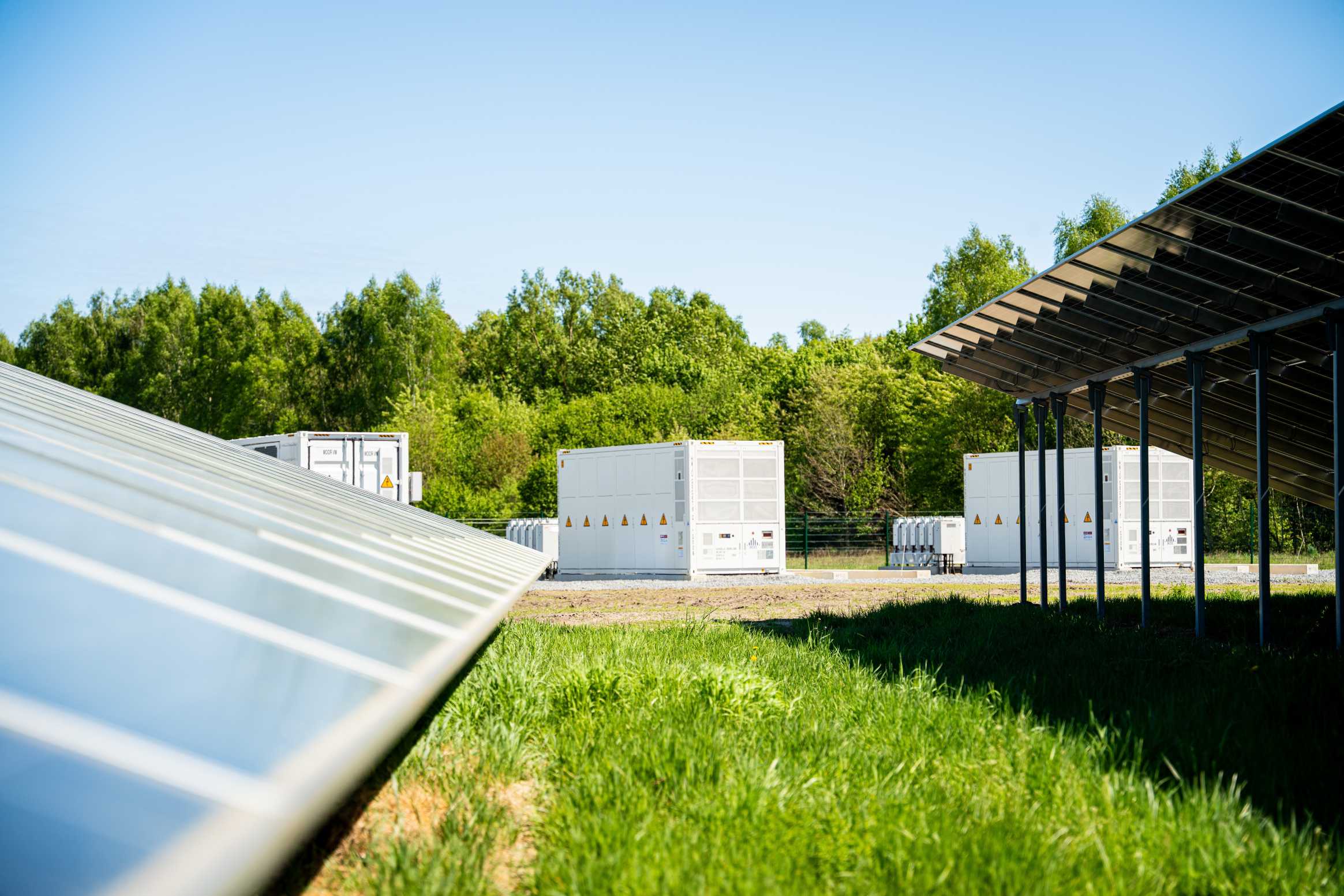
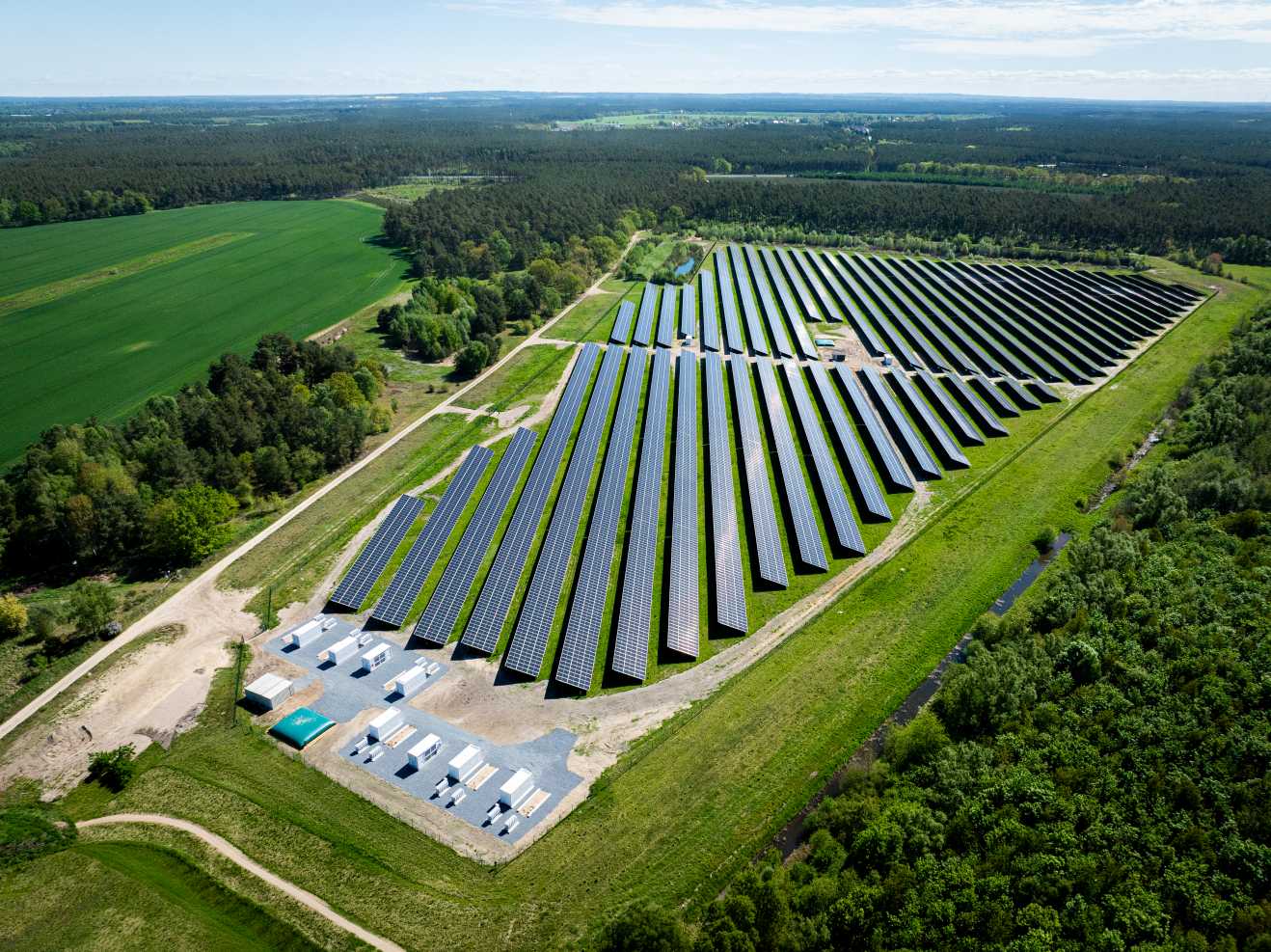
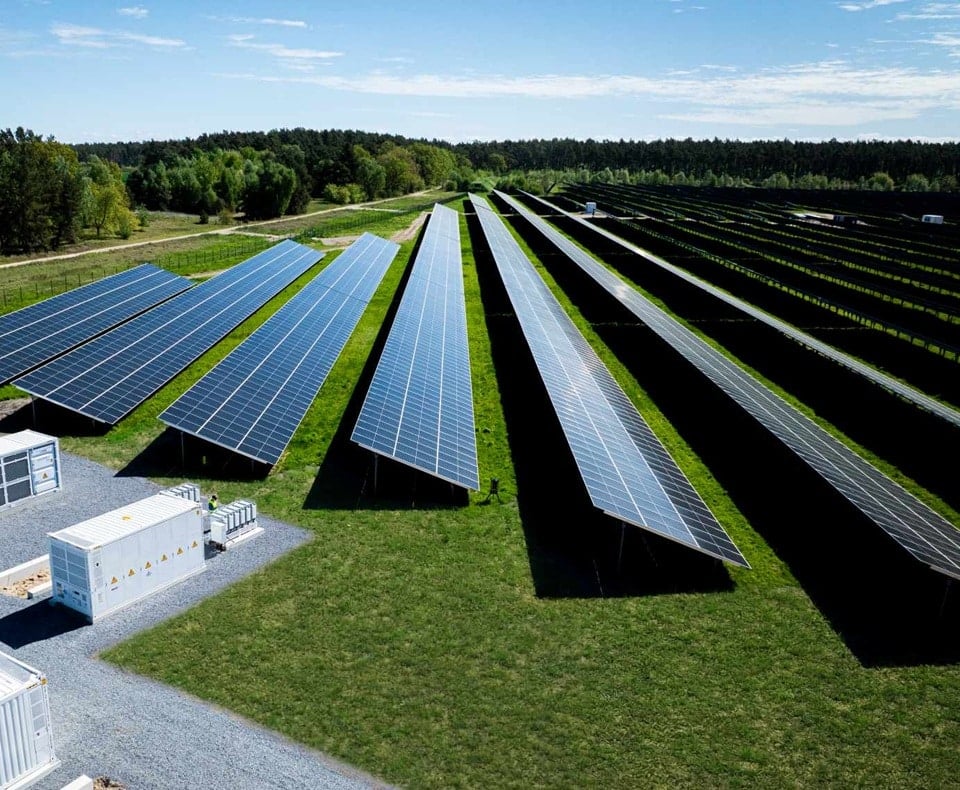
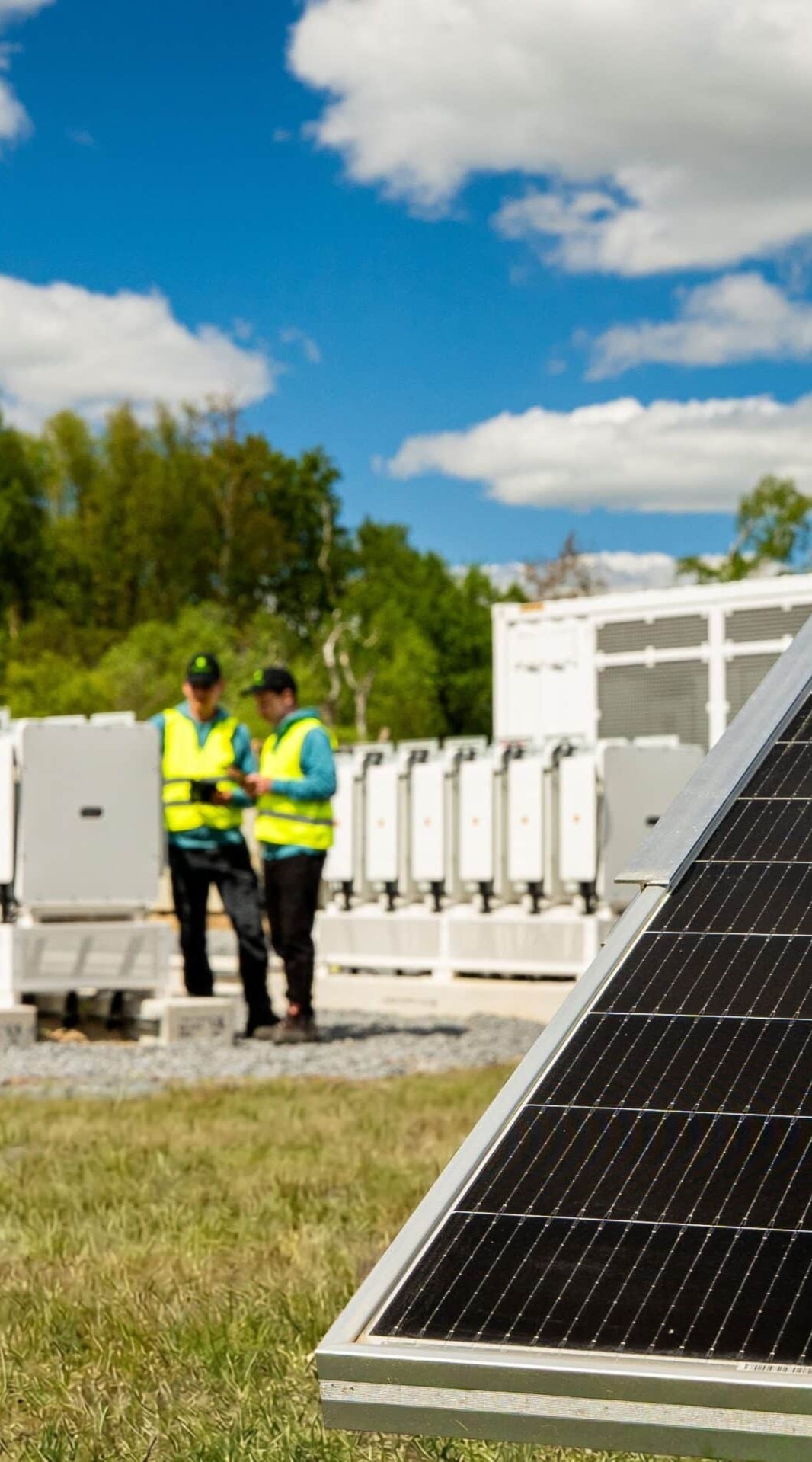
Battery Energy Storage Systems (BESS) are revolutionizing the concept of black start capability. Thanks to their digital control systems and stored energy, they are ideally suited for this task.
The key technical feature is grid-forming capability. While standard inverters (PCS) follow an existing grid signal (grid-following), grid-forming inverters can independently generate a stable and clean grid signal (voltage and frequency). A BESS with grid-forming capability can therefore establish and supply a stable island grid within seconds. The response time of the power electronics is measured in milliseconds. The VDE is currently developing technical application rules for grid-forming inverters.
The Advantages of BESS for Black Start Applications
The advantages of BESS in black start scenarios include:
- Speed: Instead of requiring minutes or hours like conventional power plants, BESS can provide stable voltage and frequency for grid restoration within seconds.
- Precision: Power electronics allow precise control of frequency and voltage, making the synchronization of additional systems easier and safer.
- Zero emissions: Unlike diesel-powered emergency generators or gas-fired power plants, the startup process is emission-free.
- Decentralized flexibility: BESS can be deployed at strategically important grid nodes to initiate and accelerate grid restoration simultaneously in multiple locations.
Regulatory Framework in Germany
Since January 2024, German transmission system operators (TSOs) have been tendering black start capability in a technology-neutral, market-based process in accordance with Section 12h of the German Energy Industry Act (EnWG). The law governs the market-based procurement of non-frequency-related ancillary services and allows BESS to participate on equal terms with conventional power plants.
Frequently Asked Questions (FAQ)
Are all battery storage systems automatically black-start capable?
No. Black start capability is not a standard feature. It requires grid-forming inverters (Grid-Forming PCS), which can independently define voltage and frequency unlike standard inverters, as well as a properly designed Energy Management System (EMS). It is a design decision that must be considered during system planning.
Are there already BESS black start projects in Germany?
The first tenders have been running since January 2024. Internationally, there are already successful examples, such as the Hornsdale Power Reserve with grid-forming technology.
What is the difference between black start and an island grid?
The island grid is the result, while black start is the process. An island grid is a self-sufficient section of the grid that operates independently from the main grid, with its own generation and load. Black start capability is the ability to create and stabilize such an island grid after a blackout.
Why can’t every power plant perform a black start?
Most large power plants (e.g., coal or nuclear plants) require a significant amount of electrical energy for auxiliary systems such as pumps, cooling, and control systems before they can even start operating. After a blackout, this energy is unavailable, which is why they depend on a “starter” — a black-start-capable power plant or BESS.
How long can a BESS supply an island grid after a black start?
The duration depends on the storage capacity (MWh) and the required output power (MW). A typical BESS can supply a subgrid for several minutes to several hours while additional power plants are being brought online. Its primary function is rapid grid establishment, not long-term power supply.
Recent Comments